
October 2026
Apparently I Need A Rolls-Royce Box
I had turned a benchmark into the minimum. Apparently the jewellery box needed leather seats before we could get going.
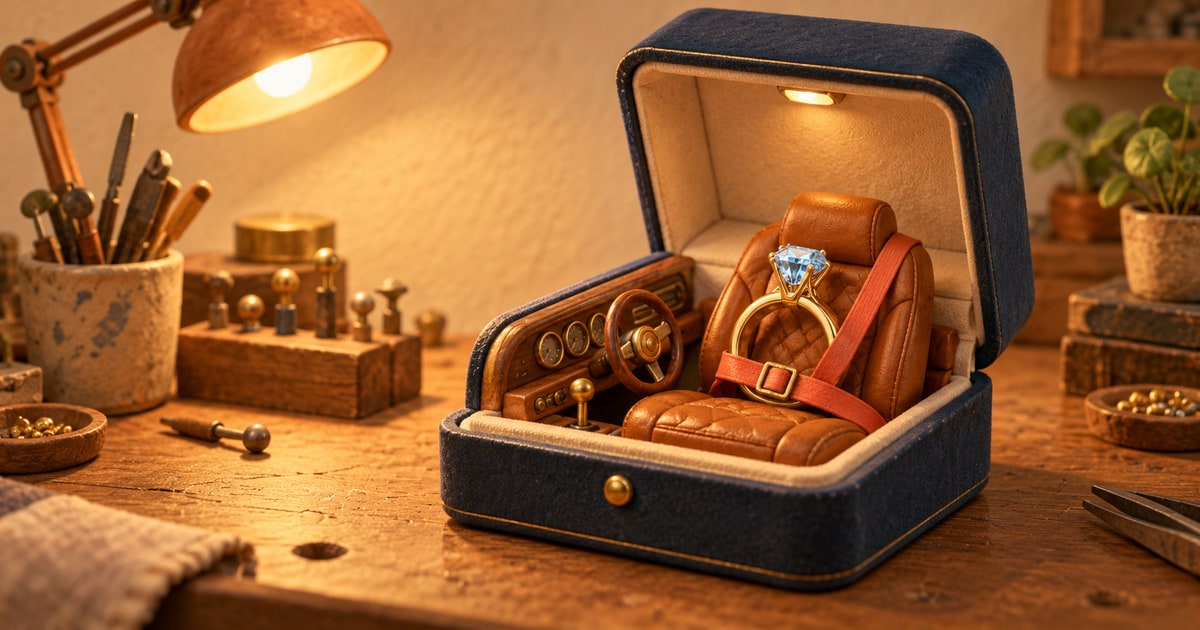
While building Simie London, I started looking at how leading jewellery companies packaged their products.
The materials. The printing. The alignment. Everything that went inside.
Useful research. Until somewhere in the looking, I decided ours needed to be that good before we could get going.
Apparently I need a Rolls-Royce box.
A Honda can get me where I need to go. I understand this with cars. With packaging, apparently, the leather seats are compulsory.
I had turned a benchmark into the minimum.
I could learn from their packaging, get perhaps 75% of the way there, and have enough to start. A rough 75%. I haven’t put the box through an exam.
But I can see the gap. The thing in front of me isn’t as good as the thing I know it could be, and that bothers me.
So I keep trying to close it.
There is already evidence that people want the product. But will more people want it? How do I reach them? What would get more of them to buy?
But let’s get the printing straight first.
This is a painful, slow way to make things. I can keep improving the parts without learning what would help us sell more.
And plenty of fairly ordinary businesses make money. Does every part of mine need to be excellent before we can sell more?
Good enough to make money is good enough for me now. Who gives a shit?
Product and brand are where I still feel the resistance. I care how things look and feel, and I believe product and brand are a big part of what makes a business defensible over time.
Simpler packaging might be less memorable, do less for reputation, give someone less reason to come back. Those differences matter.
But I haven’t established that fixing them is worth holding everything else up.
Waiting costs time and cash. Selling waits. Learning waits. The unfinished thing keeps taking up space in my head.
The slightly wrong detail is right there, annoying me. The sales I haven’t made are much less visible.
The packaging still needs to protect the jewellery and deliver what we promised. If I sell a luxury experience, presentation is part of that promise.
There is room to do that without reproducing every detail of a company I admire.
I want enough of the whole business working that someone can hear about the product, buy it, receive it and get what they paid for.
Then I can ask where improving something would make the biggest difference for the effort involved.
Maybe it is the box. Maybe it is the product. Maybe more people need to hear about something that already works.
The next version has to meet actual customers, though. Ten versions I have reviewed myself don’t tell me whether more people will buy. And if the attempt is too poor to give the idea a fair chance, a bad response might tell me very little.
I need enough quality to learn something useful.
AI makes me wonder whether getting from adequate to better could be faster and cheaper than I am used to. Accepting a decent first attempt might also make delegation easier. A person or an agent can get feedback and improve, instead of needing to produce the finished thing in my head on the first go.
That feels freeing. I can start with something I want to improve.
I still want the Rolls-Royce box. I just want to stop making the whole business wait for it.